What are the main steps in the malting process?
The three biological and thermal core steps are steeping, which hydrates barley and starts germination; germination, which develops enzymes and modifies the endosperm; and kilning, which stops growth, dries the malt and develops its color and flavor. Commercial production also includes intake cleaning and grading before steeping, followed by deculming, testing and storage after kilning.
Five operational stages from barley to finished malt
| Stage | Purpose | Typical control focus |
|---|---|---|
| 1. Intake and preparation | Clean, grade and confirm viable malting barley | Variety, moisture, protein, plumpness, germination |
| 2. Steeping | Hydrate the grain and initiate growth | Water uptake, oxygen, carbon dioxide removal, temperature |
| 3. Germination | Develop enzymes and modify the endosperm | Temperature, airflow, humidity, turning, modification |
| 4. Kilning | Stop growth, dry and create the required malt profile | Drying curve, airflow, final moisture, color, enzyme survival |
| 5. Finishing | Remove rootlets, clean, test and store the malt | Moisture, extract, modification, food safety, traceability |
The values below are typical operating references, not fixed recipes. Barley variety, kernel size, dormancy, plant design and the finished malt specification determine the actual schedule.
Step 1: steeping wakes the barley
Clean barley enters steep vessels for alternating periods under water and exposed to humidified air. These are commonly called wet stands and air rests. The wet stands drive hydration; the air rests restore oxygen and allow carbon dioxide and heat from respiration to be removed.
Barley normally begins near safe storage moisture and leaves steeping at roughly the low-to-mid 40% moisture range. A modern regime often takes approximately 24–48 hours, but the maltster adjusts it to the variety, crop condition and rate of water uptake. Chitting—the first visible emergence of the rootlet—shows that germination has started.
What can go wrong during steeping?
- Uneven hydration: kernels enter germination at different physiological stages.
- Insufficient oxygen: respiration and germination slow while unwanted metabolites accumulate.
- Excess temperature: microbial risk and metabolic heat increase.
- Poor raw material: damaged, dormant or low-vigor barley cannot be corrected by a longer steep.
Step 2: germination modifies the endosperm
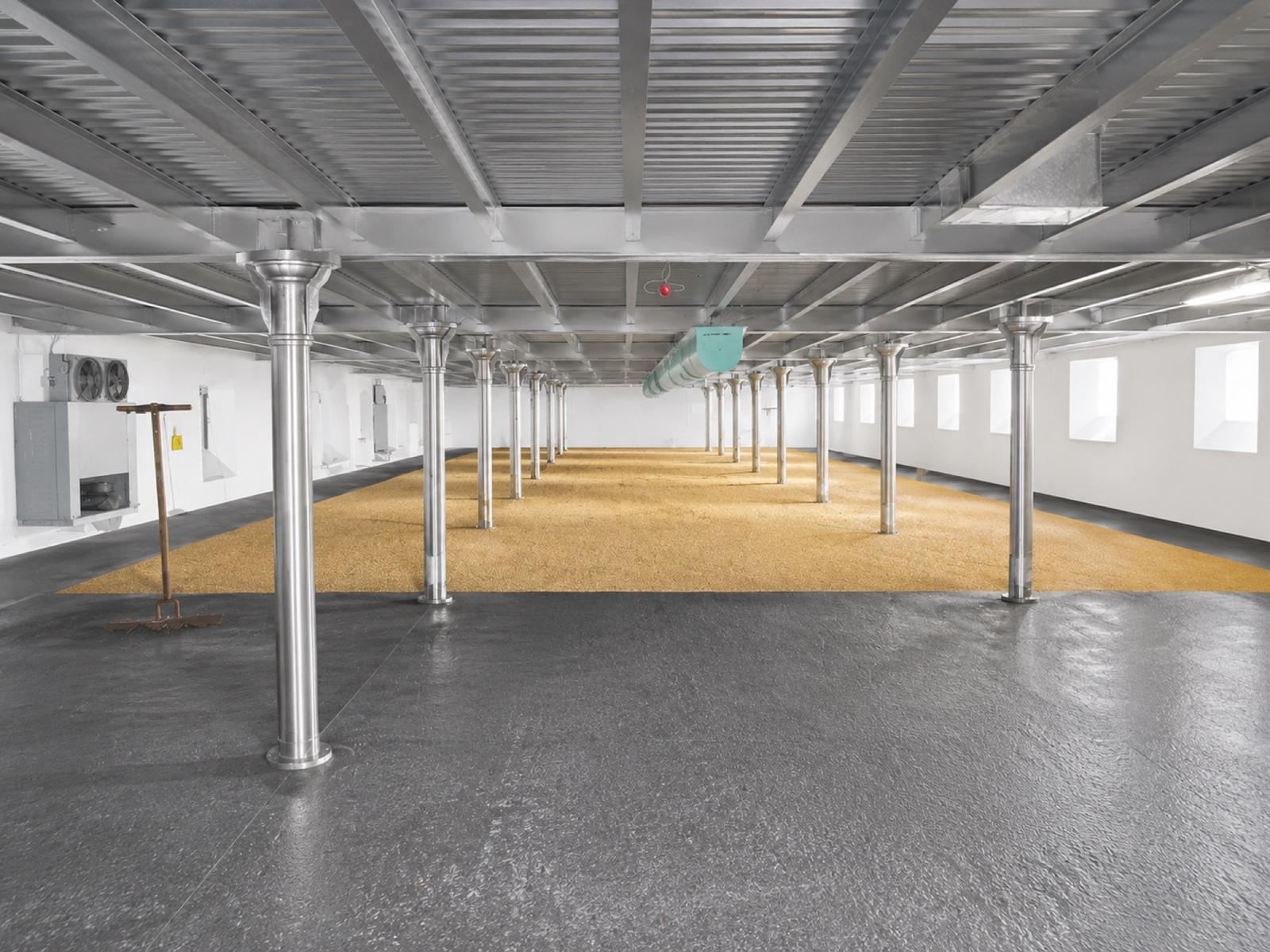
After steeping, the grain moves to a germination vessel, drum or bed. Controlled airflow supplies oxygen, manages temperature and helps remove carbon dioxide. Turning prevents rootlets from matting and improves uniformity.
During this stage, the embryo produces signals that promote enzyme synthesis and activation. Beta-glucanases and related enzymes open cell walls; proteolytic enzymes modify the protein matrix; amylolytic enzymes support later starch conversion. The grain at this point is called green malt.
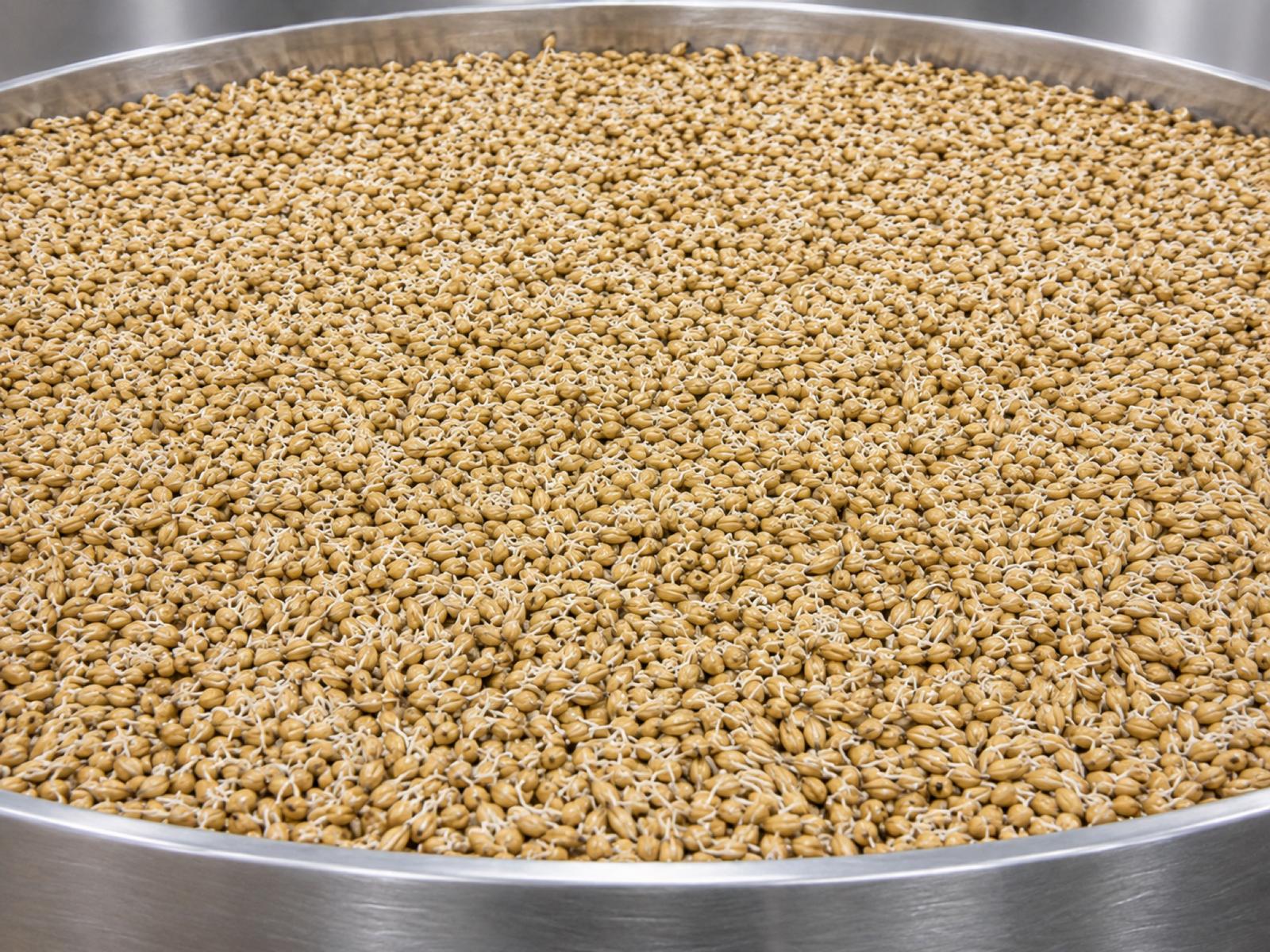
Industrial germination commonly lasts several days, often around four to six, at temperatures broadly in the mid-teens Celsius. The maltster does not stop the stage by the calendar alone. Aroma, rootlet and acrospire development, friability and plant-specific checks are used to judge whether modification matches the target.
Step 3: kilning stabilizes and shapes the malt
Kilning passes heated air through green malt to remove water and stop further growth. Early drying is deliberately gentle because the grain is still wet and its enzyme systems are vulnerable. As moisture falls, air temperature can rise. A final curing phase develops the specified aroma and color while bringing the malt to stable storage moisture.
The kiln schedule creates a trade-off. More intensive curing can deepen color and flavor, but it can also reduce enzyme activity. Pale base malt therefore uses a schedule designed to preserve sufficient enzymes, while specialty malts use different thermal treatments to build stronger toasted, caramel or roasted characteristics.
Typical outcome: finished base malt commonly leaves the kiln near 3–5% moisture. The acceptable target belongs in the malt specification because storage conditions, malt type and analytical method matter.
Critical control points across the process
Process consistency comes from matching the raw barley to the operating recipe and testing the result. Important checks include:
- Before steeping: variety, purity, moisture, protein, germination energy, plumpness and absence of contamination.
- During steeping: water uptake, temperature, dissolved oxygen, carbon dioxide removal and chitting uniformity.
- During germination: bed temperature, airflow, humidity, turning, acrospire development and modification uniformity.
- During kilning: exhaust conditions, grain moisture, time-temperature profile, color and retained enzyme strength.
- Finished malt: moisture, extract, protein, soluble nitrogen, diastatic power, alpha-amylase, beta-glucan, friability and sensory condition.
Those measurements connect the process to the finished malt quality specification. For the broader biochemical explanation and malt types, see the pillar guide What is malting?
How long does malting take?
From the start of steeping through the end of kilning, industrial malting commonly takes about seven to ten days. Intake preparation and post-kiln conditioning add operational time, while post-harvest dormancy may require barley to rest before it can germinate evenly. The exact duration is a quality decision, not a universal number.
Common questions about malting steps
Why are air rests used during steeping?
Germinating barley needs oxygen and releases carbon dioxide and heat. Air rests help restore oxygen, remove carbon dioxide and control temperature while hydration continues between wet stands.
Why is barley turned during germination?
Turning separates rootlets, reduces matting and helps distribute temperature, moisture and air more evenly through the bed.
What is green malt?
Green malt is germinated barley before kilning. It contains high moisture, active metabolism and developing enzyme systems, so it is not yet stable for storage.
Does kilning destroy all malt enzymes?
No. Base-malt kilning is designed to dry and cure the malt while retaining enough enzyme activity for brewing. Higher-temperature specialty treatments preserve less activity.